


Earlier this month Swiss biopharmaceutical company Novimmune SA announced that it had signed an international research collaboration agreement with Baxalta Inc., a newly established global biopharmaceutical leader developing, manufacturing and commercializing therapies for orphan diseases and underserved conditions in hematology, oncology and immunology, to develop novel bispecific antibodies for an unspecified indication. Financial terms of the deal were not disclosed.
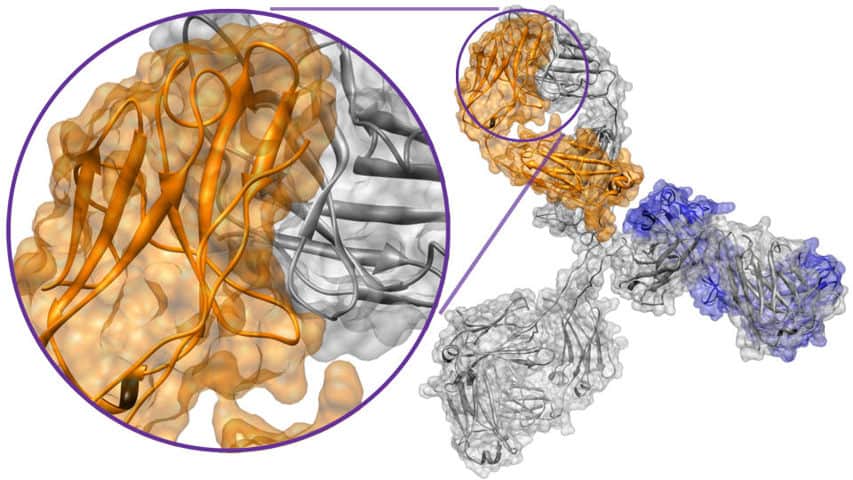
This agreement establishes the first collaboration utilizing Novimmune’s new kappa-lambda bispecific antibody technology. The proprietary platform generates fully human antibodies which target two specific binding sites with one antibody.
Therapeutic benefit
Antibodies have been characterized by two functionally important regions. The Fab (two of which are present in a single antibody molecule) and the Fc region. Today, more than 30 monoclonal antibodies (mAbs) are marketed as medicines, including 2 antibody-drug conjugates. These drugs provide physicians with a diverse range of powerful approaches to effectively treat a number of medical conditions.
Bispecific antibodies
Bispecific antibodies or BiAbs offer, in addition to ‘naked’ monoclonal antibodies as well as Antibody-drug Conjugates (ADCs), added therapeutic potential, while exploiting the beneficial structural characteristics of ‘naked’ mAbs. Bispecific antibodies generally build on the feature of having two antigen-binding sites (Fab or single-chain Fv (scFv)), each one used to provide a different target-binding specificity, albeit – uniquely – within the same molecule. This unique configuration make a great nuber of new mechanisms of action (MOAs) possible that cannot be mediated by monoclonal antibodies. This includes targeting immune cells to tumors, co-engagement of receptors, increased transport across the blood–brain barrier and replacement of missing coagulation factors. The clinical efficacy of these bispecific antibodies has been confirmed with the recent approval of blinatumomab and catumaxomab. These approved have resulted in intensifying efforts to develop optimal Bispecific antibodies formats.[1]


Novel formats
Ideally, a bispecific antibody should be undistinguishable from a standard human Immunoglobulin G (IgG) molecule.
Although there is a clear clinical potential and therapeutic benefit, making unique therapeutic approaches possible, there remains a major challenge to develop and produce bispecific antibody at the industrial scale in sufficient quantity and purity.[2] The broad application of bispecific antibodies has also been hindered by the difficulty of identifying bispecific antibody formats that exhibit favorable pharmacokinetic properties.[3]
Furthermore, modifications introduced to achieve bispecificity often have an impact on stability and risk of immunogenicity. [1]
Researchers at Novimmune have been working to solve some of these challenges. “The kappa-lambda (κλ) platform is exactly the right technology for therapy areas which need a bispecific antibody that is as close to a natural human antibody as you can get,” noted Novimmune CEO Jack Barbut.
Most bispecific antibodies currently used in biopharmaceutical applications have been constructed using chemical linkers, non-human material, antibody fragments or forced engineering, Barbut further noted.
Kappa-lambda (κλ)
Novimmune’s kappa-lambda (κλ) are unmodified fully human bispecific IgGs. The company’s kappa-lambda (κλ) is assembled by co-expressing one heavy chain and two different light chains, one κ and one λ. By using ten different targets, the company’s researchers were able to demonstrate that light chains can play a dominant role in mediating specificity and high affinity. The κλ-bodies support multiple modes of action, and their stability and pharmacokinetic properties are indistinguishable from therapeutic antibodies. Thus, in contrast to existing engineered formats, κλ-bodies are unique in offering the typical functional and biochemical characteristics of a human antibody that exploits light-chain variable domains for antigen binding and light-chain constant domains for robust downstream processing, to realize the potential of bispecific antibodies.[1]
“Our kappa-lambda antibodies are allowed to assemble naturally,” said Head of Research Nicolas Fischer. “So, they have promising development and safety characteristics such as a longer half-life, increased stability and a lower risk of provoking an unwanted reaction in patients.”


