


Antibody-drug conjugates (ADCs) have transformed cancer treatment, with 22 approved agents and more than 400 in clinical development, yet only about 11% of ADCs entering phase 1 ultimately reach approval. Poor penetration into solid tumors, heterogeneous target expression, payload resistance, and narrow therapeutic windows continue to limit their success. This article examines why ADCs fail in the clinic and how next-generation approaches, including bispecific ADCs, dual-payload designs and checkpoint inhibitor combinations, aim to close that gap.

Key Takeaways
- Delivery remains the core problem. Less than 1% of an injected ADC dose reaches solid tumors because of chaotic tumor vasculature, high interstitial pressure, and the antibody’s large size and high affinity. Payload-driven toxicities, not target-driven ones, create a “dosing wall”: below 3 mg/kg for vedotin payloads and roughly 5–10 mg/kg for topoisomerase I inhibitors.
- Bispecific ADCs target tumor heterogeneity. By binding two targets or two epitopes, bispecific ADCs can stay effective when one target is expressed at low levels. China’s approval of the EGFR × HER3 ADC izalontamab brengitecan in nasopharyngeal cancer supports this approach, and 49 bispecific ADCs are now in clinical development.
- Dual-payload ADCs aim to overcome resistance. Patients can develop resistance to vedotin and topoisomerase I payloads through TOP1 mutations, efflux pumps or loss of SLFN11. Pairing payloads with different or synergistic mechanisms may address this. Nine dual-payload ADCs are in the clinic, most from China-based biotechs, and Lilly’s acquisition of CrossBridge Bio shows growing interest from large pharma.
- Patient selection and combinations will shape outcomes. AI-based scoring methods such as AstraZeneca’s QCS link high membrane target expression to better survival. Combining an ADC with pembrolizumab improved outcomes in urothelial cancer and TNBC but not in PD-L1-high NSCLC, so choosing the right tumor type matters.
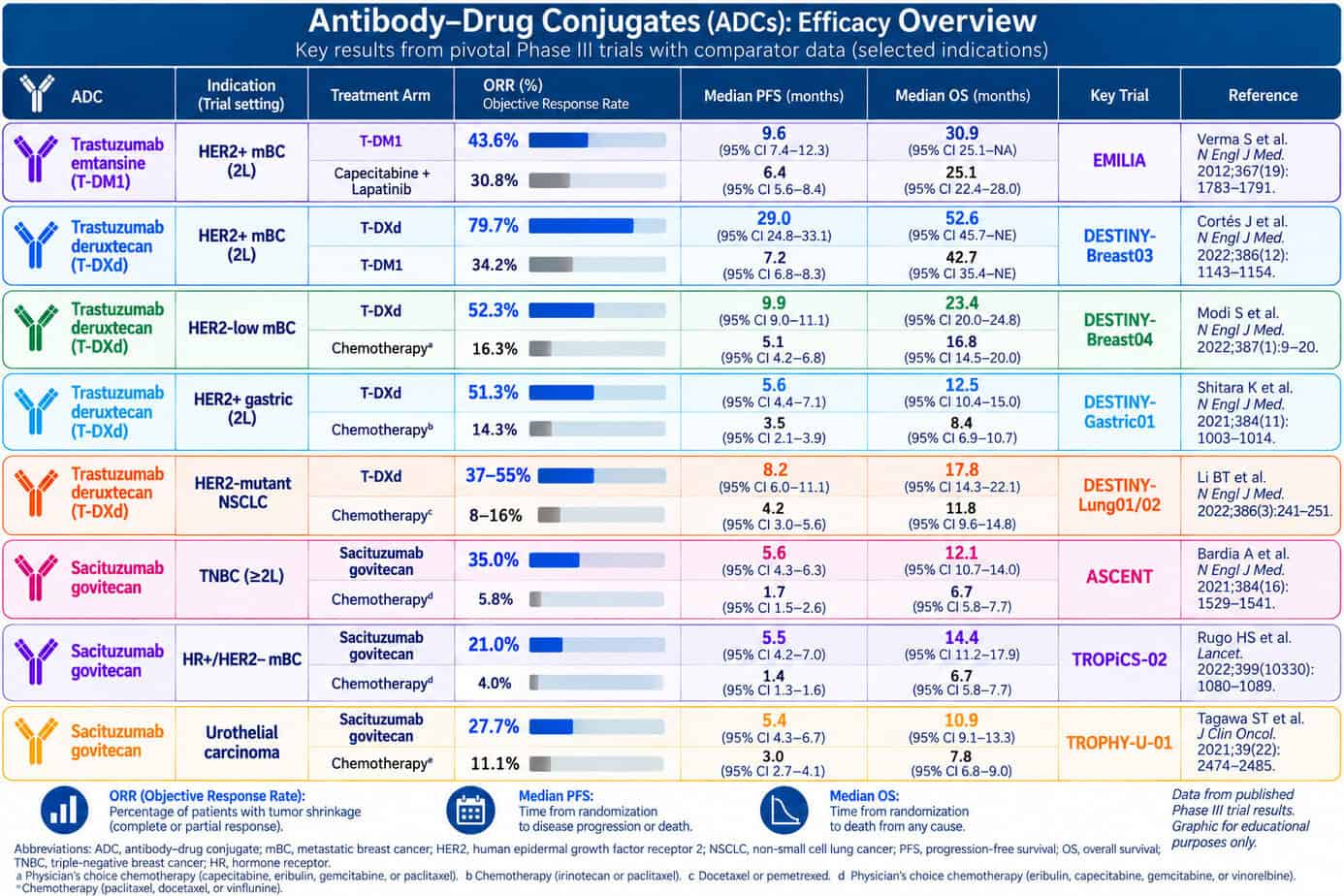
Antibody-drug conjugates (ADCs) have become one of the most exciting and successful treatment modalities for cancer patients. ADCs provide improved overall survival (OS) and progression-free survival (PFS) compared to traditional chemotherapy. As an example patients treated with ADCs targeting the most popular targets, Her2 and TROP2, have superior clinical outcomes compared to chemotherapy (Figure 1.0).
Currently, 22 ADCs have gained regulatory approval to treat a variety of cancer patients (Figure 2). There are over 400 ADCs in clinical development and more than 80 different targets being evaluated.
The first ADC to gain regulatory approval by the FDA, gemtuzumab ozogamicin (Mylotarg®; Pfizer/Wyeth), was approved in 2000 for acute myelogenous leukemia (AML) and was followed by brentuximab vedotin (Adcetris®; Pfizer/Seagen) in 2011 for classical Hodgkin lymphoma (cHL) and Diffuse large B-cell lymphoma (DLBCL).


The early consensus was that ADCs would only be useful for hematologic cancers because the large size of the antibody may hinder its ability to sufficiently penetrate the solid tumor and deliver enough drug to impact tumor growth.
In 2013, the first ADC for a solid tumor, trastuzumab emtansine (Kadcyla®; Genentech/Roche), was approved for HER2-positive metastatic breast cancer patients. This was a significant breakthrough because now both hematologic and solid tumors could be treated using ADCs.

The Chemistry, Manufacturing, and Controls (CMC) properties of ADCs have dramatically improved since gemtuzumab ozogamicin, a humanized IgG4 where 50% of the antibody is unconjugated.[1] The majority of ADCs currently use either a fully human or humanized IgG1 antibody (Table 1.0).
Currently, ADCs using random cysteine conjugation routinely have less than 5% unconjugated antibody, and ADCs using site-specific conjugation methods have no unconjugated antibody.[2]
Addressing the low clinical success rate of ADCs
Although ADCs have been successful in the clinic, which has led to an accelerated interest in ADCs and resulted in several high-profile licensing and acquisitions by large pharmaceutical companies, several challenges remain to be addressed.
The biggest challenge for ADCs and other oncology drugs is improving the rather low clinical success rate. It has been estimated that ADCs entering phase 1 clinical development have an 11% likelihood of being approved. [3] While this is substantially higher than the 5-7% likelihood of approval for small molecule inhibitors/chemotherapy, there is significant room for improvement in the clinical success rates for ADCs (Figure 3.0).

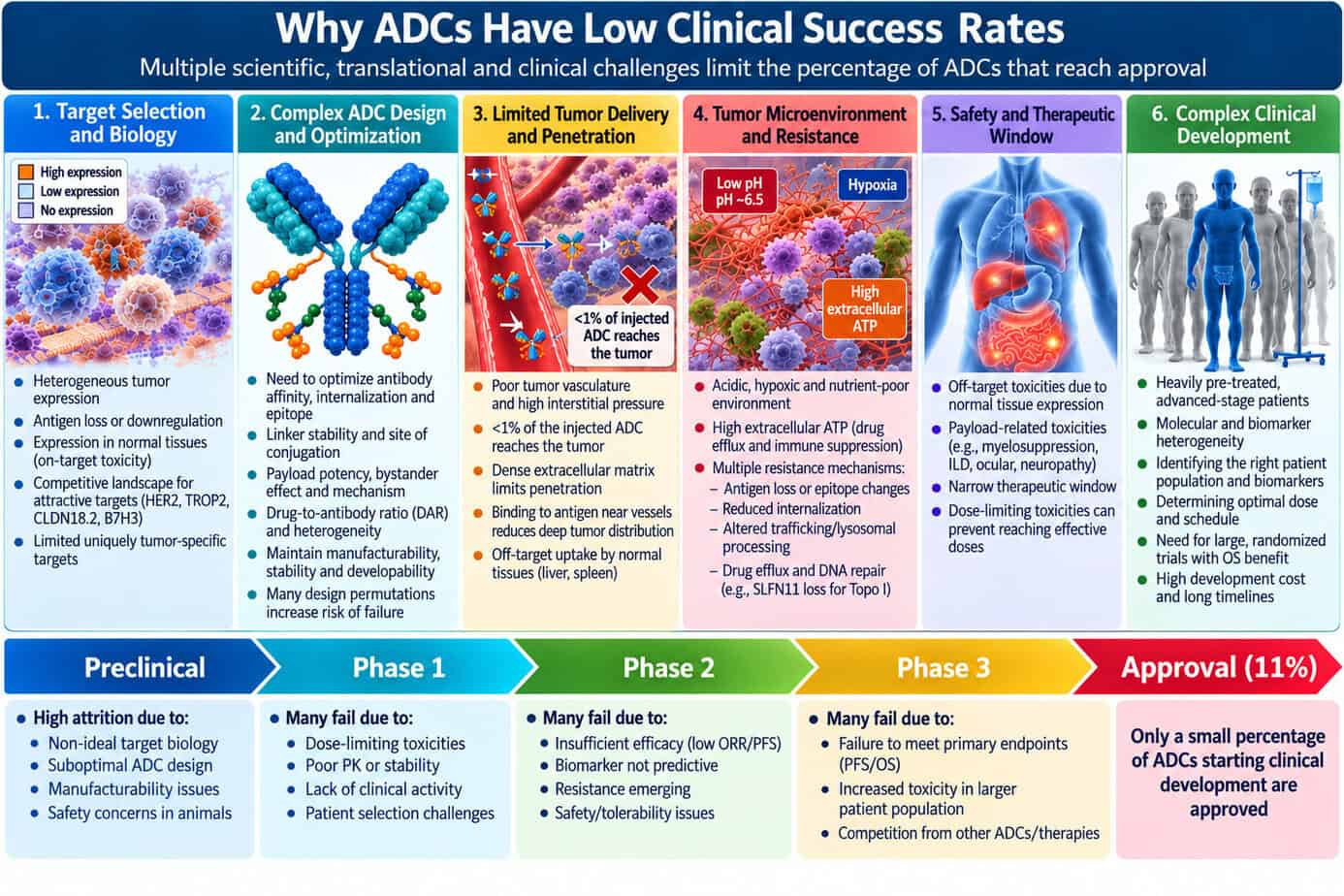
The question for the next generation of ADC developers is how can we improve the clinical success rates for ADCs? In order to answer this question, we need to understand why ADCs fail during clinical development (Figure 4.0).
Tumor biology leads to poor drug delivery
Drug delivery to solid tumors is insufficient due to the poorly formed, chaotic vascular structures and leaky tumor blood vessels. [4][5]
This leads to reduced tumor blood flow/perfusion and high interstitial tumor pressures that reduces tumor drug delivery. The reduced blood flow also results in hypoxic/low pH regions in the tumors that alters the biology of the tumor cells and leads to heterogeneous target expression, altered metabolic pathways and drug resistance (6-8).

ADCs are poor drug delivery vehicles in solid tumors
Less than 1% of the total injected ADC dose is delivered to solid tumors.[9][10] This is due to several factors such as the large size of the antibody (i.e. 150kD) and the high antibody affinities (i.e. < 1nM) for the tumor antigen makes it difficult for the ADC to penetrate more than a few cell layers away from the tumor blood vessels.
Heterogeneous tumor antigen expression leads to poor patient responses
Several ADC targets have heterogeneous expression in tumors. [11][12] The heterogeneous target expression can take several forms. The target expression in tumor cells can be described as low, medium, or high based on immunohistochemistry evaluation; the total amount of target expression on tumor cells can vary within the same tumor, where some tumor cells may have high membrane expression of the target while other tumor cells may have predominantly cytoplasmic expression or both membrane and cytoplasmic expression of the target.
The amount of cell surface expression of an ADC target is important for the majority of ADCs to be effective. Mirvetuximab soravtansine (Elahere®; AbbVie), which is an ADC against folate receptor1 (FOLR1), uses a companion diagnostic, VENTANA FOLR1 (FOLR1-2.1) RxDx Assay, to identify patients that have high folate receptor expression because those patients have the highest benefit from treatment with mirvetuximab soravtansine.[13]
Furthermore AstraZeneca recently described an artificial intelligence (AI) based IHC method, Quantitative Continuous Scoring (QCS), that showed patients treated with datopotamab deruxtecan (Datroway®; Daiichi Sankyo and AstraZeneca) or trastuzumab deruxtecan (Enhertu®; Daiichi Sankyo and AstraZeneca) who also had high membrane expression of TROP2 or Her2 had improved overall survival (OS) and progression free survival (PFS) compared to patients that had predominantly cytoplasmic expression of TROP2 or Her2. [14][15]
Competitive tumor target landscape
In order for an ADC to be efficacious, the ADC needs to bind to the cell surface target that is selectively expressed at high levels on tumors and has low to no expression on critical normal tissues, but it also needs to be internalized, deliver the payload to the lysosome where the payload is released into the cell cytosol. The payload needs to bind to its intracellular targets and induce apoptotic cell death.
There are a limited number of cell surface targets on cancer cells that meet these criteria. This lack of targets results in a large number of ADCs being developed against approved ADC targets such as Her2 and TROP2 despite the fact that there are currently six approved ADCs against Her2 and two approved ADCs against TROP2.
Resistance mechanisms in cancer patients impacts the effectiveness of ADCs
Several resistance mechanisms have been observed in patients treated with ADCs. Some patients simply don’t respond to treatment even when they have never received an ADC, while others become resistant over the course of treatment and develop an acquired resistance to the ADC. [12][16] This acquired resistance has been associated with decreased cell surface target density, resistance to the payload, which is mediated by an increase in drug efflux pumps leading to resistance to vedotin payloads or a decrease in Schlafen 11 (SLFN11) or mutations in the topoisomerase I enzyme, that results in resistance to topoisomerase I inhibitors.[17][18]

The therapeutic index conundrum
The majority of ADCs fail in clinical development because they are not efficacious and/or have significant toxicology liabilities. In other words some ADCs don’t have a sufficient therapeutic window/index. The majority of ADC toxicities on normal human tissues are payload mediated and not target mediated, which suggests that other mechanisms are responsible for non-target mediated cytotoxicity in normal tissues. There is also a dosing wall to consider.
The clinical data shows that ADCs using a vedotin payload can only be dosed below 3 mg/kg regardless of the antibody or the target while topoisomerase I inhibitor payloads can be dosed around 5 – 6 mg/kg but can be dosed up to 10mg/kg depending on the type of topoisomerase I inhibitor. [19][20]
How will the next generation of ADCs address the current challenges?
The next wave of innovation for ADCs are attempting to address several of these challenges.
Tumor target heterogeneity
This is being addressed by the development of several bispecific ADCs that can bind to two unique tumor targets or different epitopes on the same target and deliver the ADC payload to the tumor cells (Figure 5.0).
 It is common for an ADC to lose potency in patients when the cell surface receptor density drops below a certain level. The major advantage of bispecific and multi-specific ADCs is that they can bind two or more distinct targets, so they can remain efficacious even when one target has low or no cell-surface expression. This allows the ADC to achieve better, sustained tumor targeting in tumors with heterogeneous target expression (Figure 6.0).
A recent example of the promise of bispecific ADCs can be found in the EGFR x Her3 ADC, izalontamab brengitecan (Iza-bren; BL-B01D1), that was recently approved in China for treating nasopharyngeal cancer patients.
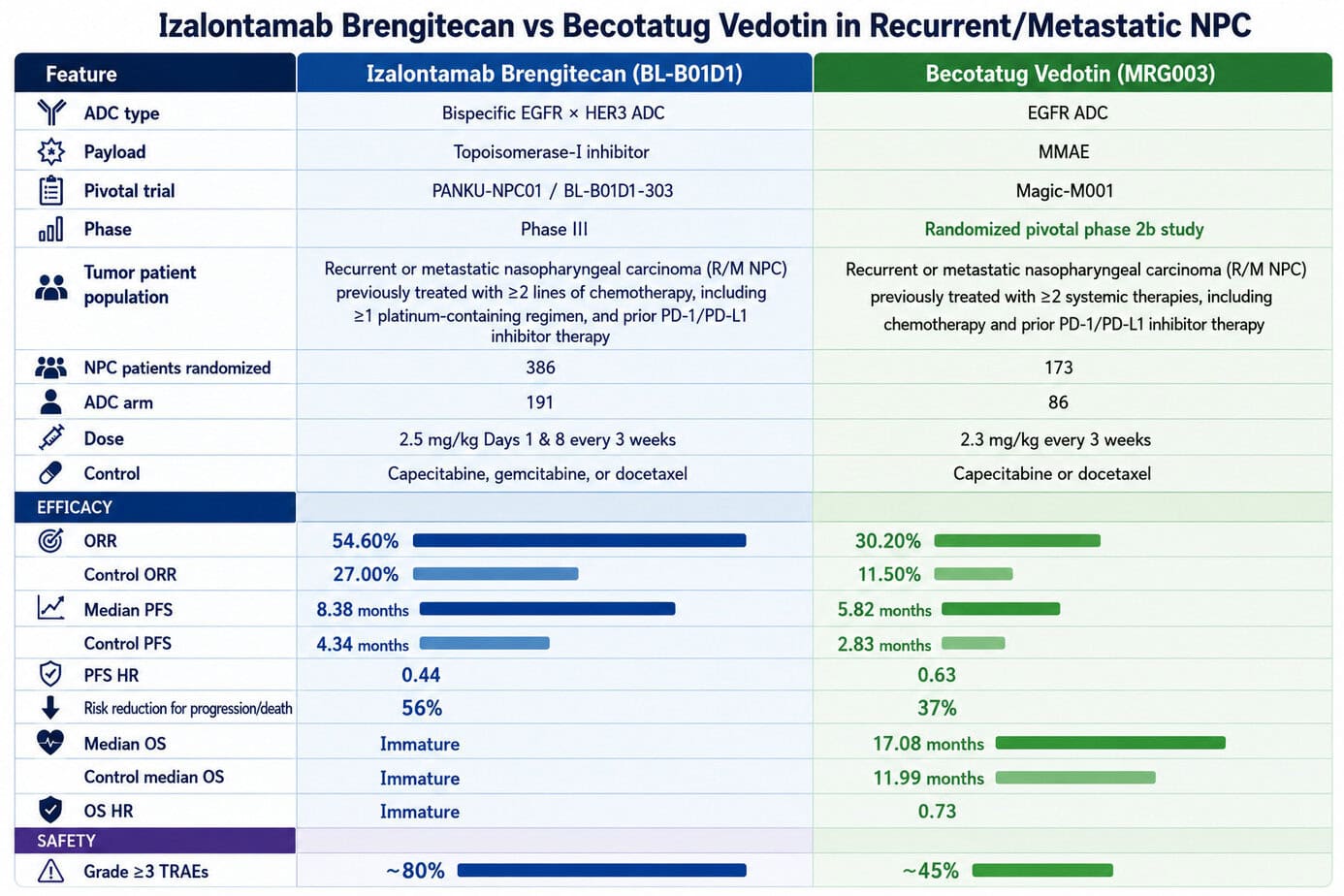
Although not a head-to-head study, the recent data from the phase 3 clinical trial (PANKU-NPC01) for izalontamab brengitecan suggest that it may have superior efficacy compared to an ADC against EGFR, becotatug vedotin, which was also recently approved in China, in nasopharyngeal cancer patients (Table 2.0).[21][22] There are currently 49 bispecific ADCs in clinical development and it will be interesting to see how these perform in the clinic.
Dual payload ADCs
Dual payload ADCs may address the issue related to tumor resistance to the payloads (Figure 7.0). There’s a growing body of evidence that patients treated with ADCs containing a topoisomerase I inhibitor or a vedotin payload develop resistance to the payloads over the course of their treatment.
This is due to multiple factors, including mutations in the topoisomerase I enzyme, the expression of drug efflux pumps, and the loss or down-regulation of SLFN11.[23][24][25] An ADC that is composed of two different payloads that either have different mechanisms of activity (i.e., tubulin inhibitor and a topoisomerase I inhibitor) or potential synergistic activity (i.e., topoisomerase I inhibitor and an ATR inhibitor) may be efficacious when the tumor becomes resistant to one of the payloads.[26]

There are currently nine dual payload ADCs in clinical development and the majority are being developed by biotech companies based in China. China has become a leader in developing dual payload ADCs as well as bispecific ADCs (Figure 8.0).
Notably, Eli Lilly recently acquired CrossBridge Bio and its preclinical dual-payload ADC, CB-120, which targets TROP2 and is conjugated to a topoisomerase I inhibitor and an ataxia telangiectasia and Rad3 (ATR) inhibitor.[27] It will be interesting to see whether dual-payload ADCs can address drug resistance seen in patients.
Recruitment of the patient’s immune system
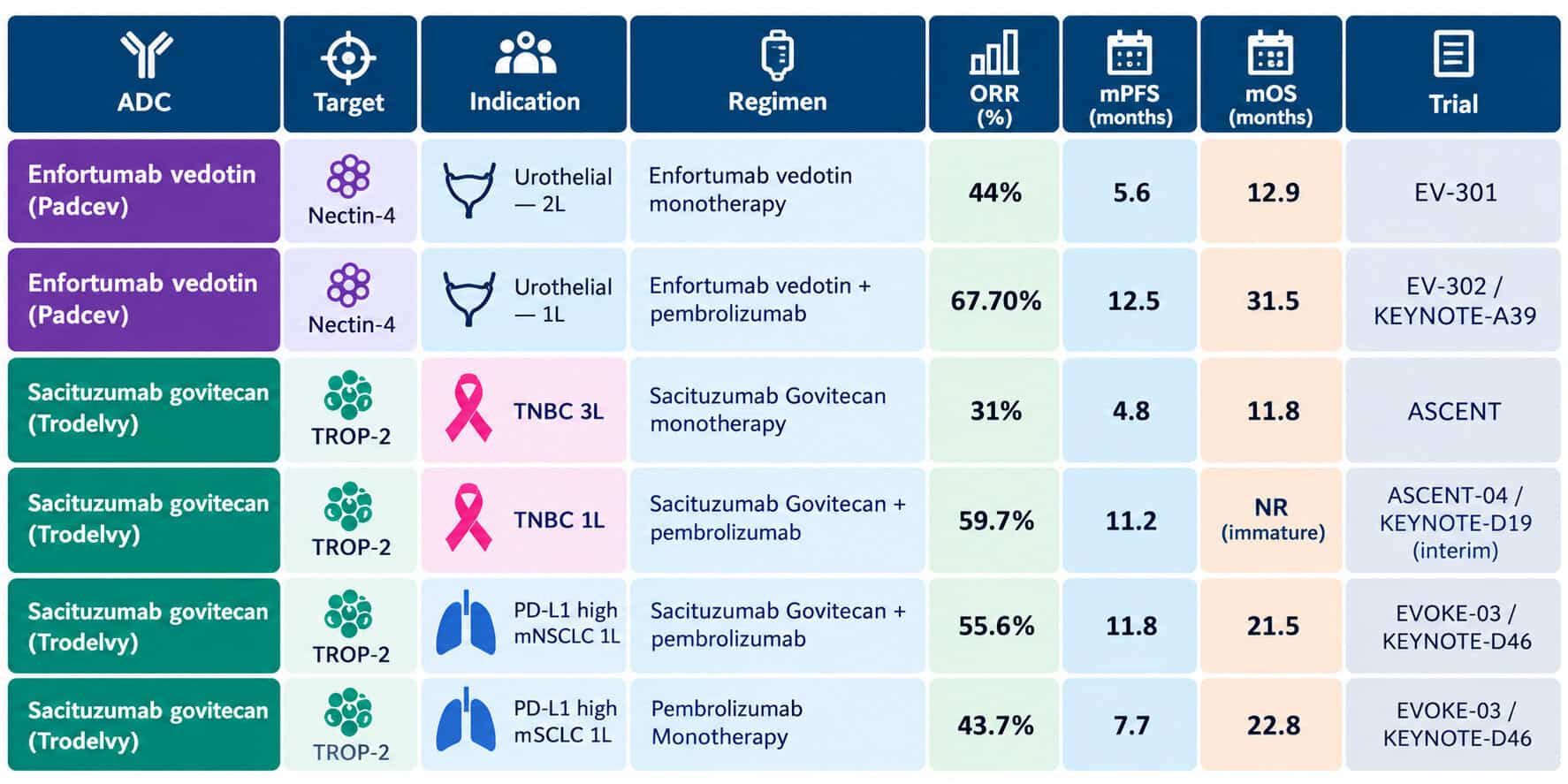
While ADCs, in clinical development, have shown superior efficacy compared to chemotherapy, recent studies have shown that some ADCs, when used in combination with immune checkpoint inhibitors (i.e. Pembrolizumab; Keytruda® Mercl & Co/MDS), show improved clinical outcomes compared to ADCs used as single agents (Table 3.0).

Enfortumab vedotin (Padcev®; Astellas Pharma/Pfizer), when combined with pembrolizumab in the EV-302 / KEYNOTE-A39 trial for urethral cancer patients, showed superior clinical outcomes compared to enfortumab vedotin alone in the EV-301 trial for urethral cancer patients. A similar benefit of an ADC combined with a checkpoint inhibitor was reported for a combination study with pembrolizumab and sacituzumab govitecan (Trodelvy®; Gillead) in the ASCENT-04 / KEYNOTE-D19 trial for triple-negative breast cancer (TNBC) patients. [28][29[30]
Not all ADC and checkpoint inhibitor combinations result in enhanced clinical outcomes. The EVOKE-03 / KEYNOTE-D46 trial where sacituzumab govitecan was evaluated in combination with pembrolizumab against pembrolizumab and chemotherapy showed sacituzumab govitecan provided no additional benefit in OS in previously untreated, PD-L1 high, metastatic non-small cell lung cancer (NSCLC) patients.
These data suggest that the selection of the appropriate tumor type may have a significant impact on the clinical success of ADCs when combined with checkpoint inhibitors.
Discussion
ADCs have clearly been a game changer for cancer treatment but there is significant room for improvement. The next generation of ADCs should focus on technologies that widen the therapeutic window to improve clinical success rates. This will be difficult to achieve but incremental changes will help move the field toward this goal.
The technologies that aids in selecting the right patients (i.e. QCS), addresses heterogeneous tumor expression of targets (i.e. bispecific/multi-specific ADCs), improves the sustained delivery of the ADC payload to a larger number of cells in the tumor via modified antibody formats and/or antibody affinity optimization, reduces payload toxicity on normal tissues using novel payloads/linkers and antibody formats, and addresses drug resistance mechanisms will help improve the clinical outcomes for patients thus improving the clinical success rates for ADCs.
In order to achieve these lofty goals, efforts should be made to improve the translatability of ADC efficacy and safety studies during the preclinical phase of development. This should help move the best clinical candidates into clinical development.
Perhaps machine learning/artificial intelligence technologies could be used to bridge the gap between the lessons learned in clinical development and the implementation of those lessons in the preclinical development workflows. In order for this to be successful, full disclosure of both approved and failed/discontinued ADCs needs to be provided.
I am looking forward to seeing continued innovations in ADC technologies and the impact these innovations will have in the clinic.
References
[1] Vollmar BS, Frantz C, Schutten MM, Zhong F, Del Rosario G, Go MAT, Yu SF, Leipold DD, Kamath AV, Ng C, Xu K, Dela Cruz-Chuh J, Kozak KR, Chen J, Xu Z, Wai J, Adhikari P, Erickson HK, Dragovich PS, Polson AG, Pillow TH. Calicheamicin Antibody-Drug Conjugates with Improved Properties. Mol Cancer Ther. 2021 Jun;20(6):1112-1120. doi: 10.1158/1535-7163.MCT-20-0035. Epub 2021 Mar 15. PMID: 33722856.
[2] Fan Q, Chen H, Wei G, Wei D, Wang Z, Zhang L, Wang J, Zhu M. A review of conjugation technologies for antibody drug conjugates. Antib Ther. 2025 Apr 17;8(2):157-170. doi: 10.1093/abt/tbaf010. PMID: 40491604; PMCID: PMC12146483.
[3] Intelligence IP. Clinical Development Success Rates and Contributing Factors 2011–2020. 2021.
[4] Fukumura D, Jain RK. Tumor microvasculature and microenvironment: targets for anti-angiogenesis and normalization. Microvasc Res. 2007 Sep-Nov;74(2-3):72-84. doi: 10.1016/j.mvr.2007.05.003. Epub 2007 May 18. PMID: 17560615; PMCID: PMC2100036.
[5] Ariffin AB, Forde PF, Jahangeer S, Soden DM, Hinchion J. Releasing pressure in tumors: what do we know so far and where do we go from here? A review. Cancer Res. 2014 May 15;74(10):2655-62. doi: 10.1158/0008-5472.CAN-13-3696. Epub 2014 Apr 28. PMID: 24778418.
[6] Chen Z, Han F, Du Y, Shi H, Zhou W. Hypoxic microenvironment in cancer: molecular mechanisms and therapeutic interventions. Signal Transduct Target Ther. 2023 Feb 17;8(1):70. doi: 10.1038/s41392-023-01332-8. PMID: 36797231; PMCID: PMC9935926.
[7] Liao C, Liu X, Zhang C, Zhang Q. Tumor hypoxia: From basic knowledge to therapeutic implications. Semin Cancer Biol. 2023 Jan;88:172-186. doi: 10.1016/j.semcancer.2022.12.011. Epub 2023 Jan 2. PMID: 36603793; PMCID: PMC9929926.
[8] Peppicelli S, Calorini L, Bianchini F, Papucci L, Magnelli L, Andreucci E. Acidity and hypoxia of tumor microenvironment, a positive interplay in extracellular vesicle release by tumor cells. Cell Oncol (Dordr). 2025 Feb;48(1):27-41. doi: 10.1007/s13402-024-00969-z. Epub 2024 Jul 18. PMID: 39023664; PMCID: PMC11850579.
[9] Manzano A, Ocaña A. Antibody-Drug Conjugates: A Promising Novel Therapy for the Treatment of Ovarian Cancer. Cancers (Basel). 2020 Aug 9;12(8):2223. doi: 10.3390/cancers12082223. PMID: 32784819; PMCID: PMC7464539.
[10] Ducry L, Stump B. Antibody-drug conjugates: linking cytotoxic payloads to monoclonal antibodies. Bioconjug Chem. 2010 Jan;21(1):5-13. doi: 10.1021/bc9002019. PMID: 19769391.
[11] Duhon AA, McLean K. Navigating Solid Tumor Heterogeneity: The Promise and Challenges of Antibody-Drug Conjugates. Cancer Heterog Plast. 2025;2(4):10.47248/chp2502040017. doi: 10.47248/chp2502040017. Epub 2025 Oct 15. PMID: 41334034; PMCID: PMC12668522.
[12] Shah NM, Meric-Bernstam F. Antibody-drug conjugates in solid tumors: Efficacy, challenges, and opportunities. J Exp Med. 2026 Aug 3;223(8):e20252603. doi: 10.1084/jem.20252603. Epub 2026 Jul 24. PMID: 42496576.
[13] Deutschman E, Fulton R, Sloss CM. Evaluation of Laboratory-Derived Immunohistochemical Assays for Folate Receptor α Expression in Epithelial Ovarian Cancer and Comparison With a Companion Diagnostic. Arch Pathol Lab Med. 2025 Oct 1;149(10):930-937. doi: 10.5858/arpa.2024-0210-OA. PMID: 40073910.
[14] Kapil A, Spitzmüller A, Brieu N, Haneder S, Shumilov A, Meier A, Cecchi F, Barkell A, Harder N, Mittermaier K, Hidalgo-Sastre A, Alleze R, Schick M, Schmidt G, Sade H, Tsuchihashi Z, Suto F, Gustavson M, Barrett JC, Carroll D. HER2 quantitative continuous scoring for accurate patient selection in HER2 negative trastuzumab deruxtecan treated breast cancer. Sci Rep. 2024 May 27;14(1):12129. doi: 10.1038/s41598-024-61957-9. PMID: 38802399; PMCID: PMC11130140.
[15] Y-L. Wu ea. 357P: Association of TROP2 quantitative continuous scoring (QCS) normalised membrane ratio (NMR) with efficacy in Chinese patients (pts) with advanced/metastatic non-small cell lung cancer (a/mNSCLC) treated with datopotamab deruxtecan (Dato-DXd) in TROPION-PanTumor02. Journal of Thoracic Oncology, 20, S212-S213. 2025.
[16] Zhou K, Liu X, Zhu H. Overcoming resistance to antibody-drug conjugates: from mechanistic insights to cutting-edge strategies. J Hematol Oncol. 2025;18(1):96. Epub 20251103. doi: 10.1186/s13045-025-01752-9. PubMed PMID: 41185045; PubMed Central PMCID: PMC12581271.
[17] Li S, Zhao X, Fu K, Zhu S, Pan C, Yang C, Wang F, To KKW, Fu L. Resistance to antibody-drug conjugates: A review. Acta Pharm Sin B. 2025 Feb;15(2):737-756. doi: 10.1016/j.apsb.2024.12.036. Epub 2024 Dec 31. PMID: 40177568; PMCID: PMC11959940.
[18] Zhang; B, Ibrahim; A, Stewart; CA, Diao; L, Wang; Q, Shen; L, et al. Activity of HER2- and TROP2- antibody drug conjugates (ADCs) in small cell lung cancer (SCLC) models with SLFN11 as a predictive biomarker. Cancer Res 2024;84:6392. 2024.
[19] Neff-LaFord HD, Carratt SA, Carosino C, Everds N, Cardinal KA, Duniho S, Schutten MM, Frantz C, Zuch de Zafra C, Harstad EB. The Vedotin Antibody-Drug Conjugate Payload Drives Platform-Based Nonclinical Safety and Pharmacokinetic Profiles. Mol Cancer Ther. 2024 Oct 1;23(10):1483-1493. doi: 10.1158/1535-7163.MCT-24-0087. PMID: 38692647; PMCID: PMC11443215.
[20 Rubahamya B, Dong S, Thurber GM. Clinical translation of antibody drug conjugate dosing in solid tumors from preclinical mouse data. Sci Adv. 2024 May 31;10(22):eadk1894. doi: 10.1126/sciadv.adk1894. Epub 2024 May 31. PMID: 38820153; PMCID: PMC11141632.
[21] Yang Y, Zhou H, Tang L, Qiu S, Han Y, Ji D, Chen X, Lei F, Qu S, Deng B, Chen L, Huang J, Guo Y, Liu Z, Chen D, Li J, Shu X, Qin Y, Fu Z, Li B, Zhang P, Chen S, Hong J, Wei Y, Qin X, Qu S, Yang K, Lin D, Wang J, Yang L, Xiao S, Zhu H, Zhu Y, Zhang L; BL-B01D1–303 Investigators. Izalontamab brengitecan, an EGFR and HER3 bispecific antibody-drug conjugate, versus chemotherapy in heavily pretreated recurrent or metastatic nasopharyngeal carcinoma: a multicentre, randomised, open-label, phase 3 study in China. Lancet. 2025 Nov 8;406(10516):2235-2243. doi: 10.1016/S0140-6736(25)01954-3. Epub 2025 Oct 19. PMID: 41125110.
[22] Fei Han XW, Yanqun Xiang, Lin-Quan Tang, Song Qu, Xiaolei Shu, Peng Zhang, Sufang Qiu, Yujuan Zhou, Ye Guo, Guiqiong Xu, Kunyu Yang, Jingao Li, Mingjun Xu, Fenghua Wang, and Rui-Hua Xu. Becotatug vedotin vs. chemotherapy in pre-heavily treated advanced nasopharyngeal carcinoma: A randomized, controlled, multicenter, open-label study. J Clin Oncol 2025;43.
[23] Abelman RO, Wu B, Barnes H, Medford A, Norden B, Putur A, Bitman E, Thant W, Liu T, Weipert C, Fell G, Spring LM, Wander SA, Moy B, Vidula N, Isakoff SJ, Varkaris A, Juric D, Corcoran RB, Ellisen LW, Bardia A. TOP1 Mutations and Cross-Resistance to Antibody-Drug Conjugates in Patients with Metastatic Breast Cancer. Clin Cancer Res. 2025 May 15;31(10):1966-1974. doi: 10.1158/1078-0432.CCR-24-2771. PMID: 39745368; PMCID: PMC12079096.
[24] Zhou K, Li Y, Wang W, Chen Y, Qian B, Liang Y, Li H, Xu R, Zhuang L. SLFN11: a pan-cancer biomarker for DNA-targeted drugs sensitivity and therapeutic strategy guidance. Front Oncol. 2025 Jul 22;15:1582738. doi: 10.3389/fonc.2025.1582738. Erratum in: Front Oncol. 2026 Feb 04;16:1779304. doi: 10.3389/fonc.2026.1779304. PMID: 40766331; PMCID: PMC12324164.
[25] Kijima T, Takada-Owada A, Shimoda H, Kokubun H, Uematsu T, Takei K, Betsunoh H, Yashi M, Ishida K, Kamai T. Predictive role of ABC transporters in the efficacy of enfortumab vedotin for urothelial carcinoma. BJUI Compass. 2025 Jan 11;6(1):e488. doi: 10.1002/bco2.488. PMID: 39877564; PMCID: PMC11771482.
[26] Kundu K, Cardnell RJ, Zhang B, Shen L, Stewart CA, Ramkumar K, Cargill KR, Wang J, Gay CM, Byers LA. SLFN11 biomarker status predicts response to lurbinectedin as a single agent and in combination with ATR inhibition in small cell lung cancer. Transl Lung Cancer Res. 2021 Nov;10(11):4095-4105. doi: 10.21037/tlcr-21-437. PMID: 35004241; PMCID: PMC8674596.
[27] Lilly makes preclinical ADC specialist CrossBridge its latest acquisition in vague $300M deal [Internet]. Fierce Biotech; 2026. Online. Last accessed on October 11, 2026
[28] Tolaney SM, de Azambuja E, Kalinsky K, Loi S, Kim SB, Yam C, Rapoport B, Im SA, Pistilli B, Mchayleh W, Cescon DW, Watanabe J, Bañuelas MAL, Freitas-Junior R, Salvador Bofill J, Afshari M, Gary D, Wang L, Lai C, Schmid P; ASCENT-04/KEYNOTE-D19 Clinical Trial Investigators. Sacituzumab Govitecan plus Pembrolizumab for Advanced Triple-Negative Breast Cancer. N Engl J Med. 2026 Jan 22;394(4):354-366. doi: 10.1056/NEJMoa2508959. PMID: 41564397.
[29] Powles T, Valderrama BP, Gupta S, Bedke J, Kikuchi E, Hoffman-Censits J, Iyer G, Vulsteke C, Park SH, Shin SJ, Castellano D, Fornarini G, Li JR, Gümüş M, Mar N, Loriot Y, Fléchon A, Duran I, Drakaki A, Narayanan S, Yu X, Gorla S, Homet Moreno B, van der Heijden MS; EV-302 Trial Investigators. Enfortumab Vedotin and Pembrolizumab in Untreated Advanced Urothelial Cancer. N Engl J Med. 2024 Mar 7;390(10):875-888. doi: 10.1056/NEJMoa2312117. PMID: 38446675.
[30] Bardia A, Rugo HS, Tolaney SM, Loirat D, Punie K, Oliveira M, Brufsky A, Kalinsky K, Cortés J, Shaughnessy JO, Diéras V, Carey LA, Gianni L, Piccart-Gebhart M, Loibl S, Yoon OK, Pan Y, Hofsess S, Phan SC, Hurvitz SA. Final Results From the Randomized Phase III ASCENT Clinical Trial in Metastatic Triple-Negative Breast Cancer and Association of Outcomes by Human Epidermal Growth Factor Receptor 2 and Trophoblast Cell Surface Antigen 2 Expression. J Clin Oncol. 2024 May 20;42(15):1738-1744. doi: 10.1200/JCO.23.01409. Epub 2024 Feb 29. PMID: 38422473; PMCID: PMC11107894.
Featured image: © 2026 CH Targeting ADCs. Used with permission
DOI: 10.14229/jadc.2026.13.10.001


