



Rethinking ADC Design: Lessons from NBE-002 and the Potency of PNU-159682
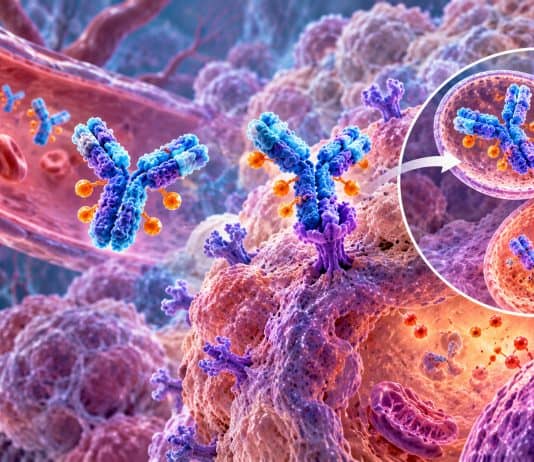
Antibody-drug conjugates (ADCs) have emerged as a transformative class of targeted cancer therapeutics, combining the specificity of monoclonal antibodies with the cytotoxicity of potent payloads. The development of NBE-002*, an ROR1-targeted ADC using the highly potent anthracycline derivative PNU-159682, provides valuable insights into the opportunities and challenges of ADC chemical design. By examining the story of NBE-002, we can better understand how payload potency, linker chemistry, and conjugation strategy determine both preclinical promise and clinical limitations.

TROP-2 and the Promise and Peril of High-Affinity in ADCs
TROP-2 and the Promise and Peril of High-Affinity in ADCs -- Over the last decades, Antibody–drug conjugates (ADCs) have emerged as a transformative class of cancer therapeutics, offering the promise of targeted cytotoxicity with the precision of monoclonal antibodies.* To fulfill this promise, the ideal ADC includes an antibody that is specific for binding to the target antigen, has high binding affinity for that target, and, at the same time, has low immunogenicity. In addition, the antibody should have a long plasma half-life and rapid internalization.

Antibody-Drug Conjugates in Oncology: Why Potency Is No Longer the Limiting Factor
Antibody-Drug Conjugates in Oncology: Why Potency Is No Longer the Limiting Factor

How CDMOs Can Unlock One-step, High-Yield and Homogeneous ADC Manufacturing
How CDMOs Can Unlock One-step, High-Yield and Homogeneous ADC Manufacturing

Can Precision ADC Therapy Overcome Current Barriers in AML?
Acute Myeloid Leukemia (AML) is a heterogeneous and highly aggressive hematologic malignancy characterized by a wide range of cytogenetic and molecular abnormalities that define distinct disease subgroups.

Reviewing the Key Trends and Insights from the ADC Linker & Conjugation Summit
Reviewing the Key Trends and Insights from the ADC Linker & Conjugation Summit

Takeaways from the 3rd Antibody-Drug Conjugate (ADC) Toxicity Summit
3rd Antibody-Drug Conjugate (ADC) in Boston, MA, brought together a group of diverse yet deeply specialized experts who shared their knowledge, clinical insights, and technical experience with remarkable openness and clarity.

The Opportunity to go Beyond “Chemo on a Stick” ADCs
The Opportunity to go Beyond “chemo on a stick” ADCs
Analytical Techniques for Antibody-Drug Conjugates: Comprehensive Insights
Antibody-drug conjugates (ADCs) are a cutting-edge class of biopharmaceuticals that combine the selectivity of monoclonal antibodies with the cytotoxic potency of small-molecule drugs.
This targeted delivery system has redefined oncology treatment by reducing systemic toxicity and improving efficacy. ADCs are composed of a tumor-targeting antibody, a cytotoxic agent, and a chemical linker, which together create a complex structure that presents various analytical challenges.

Recent Trends of ADCs
Antibody-drug conjugates (ADCs) are rapidly emerging as a transformative approach in cancer therapeutics, offering significant advancements over traditional treatments. The global ADC market is projected to reach $11.29 billion in 2023, with an estimated compound annual growth rate (CAGR) of 9.2% between 2024 and 2030, reflecting substantial economic and scientific interest in this field

