

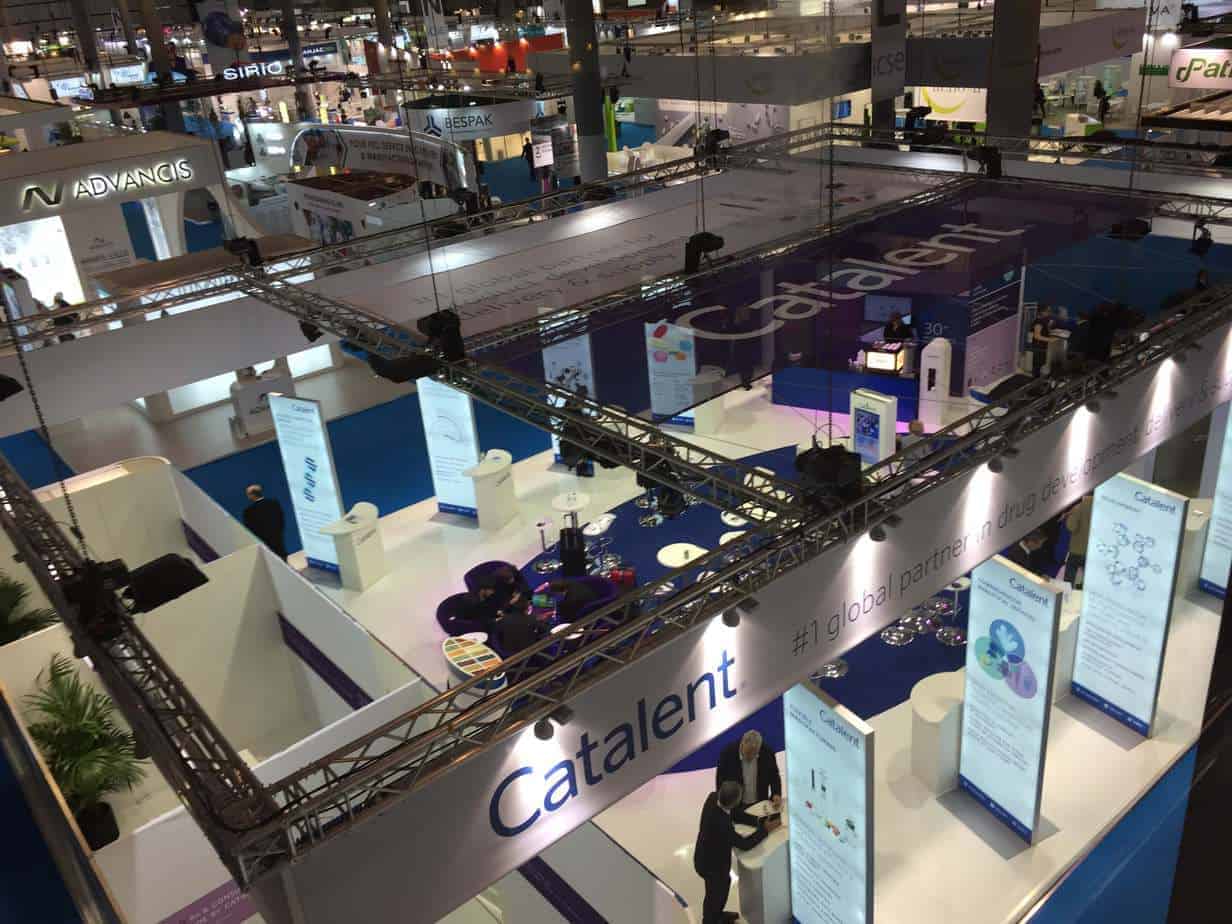

Lisata Therapeutics and Catalent have signed a global product license agreement that allows Catalent to evaluate Lisata’s certepetide and its analogs into multiple antibody-drug conjugates using Catalent’s SMARTag® technology platform to address difficult-to-treat diseases.
Certepetide (formerly LSTA1 and CEND-1), a proprietary, internalizing RGD (arginyl-glycyl-aspartic acid, or iRGD) bifunctional cyclic peptide, is being tested by Lisata as a cancer therapeutic to be used in combination with other anticancer agents to enhance solid tumor targeting and penetration and improve treatment outcomes.
Certepetide’s mechanism of action is a two-step process that enhances the delivery of anticancer drugs to solid tumors. It binds to integrin receptors on tumor cells, where it is cleaved to release a CendR fragment. This fragment then binds to a neuropilin-1 (NRP-1) receptor. This activates an ‘uptake’ transport pathway that facilitates and enhances the delivery and therapeutic index of co-administered anticancer agents into the tumor and its surrounding microenvironment, while selectively depleting immunosuppressive T cells, enhancing cytotoxic T cells in the tumor microenvironment, and inhibiting the metastatic cascade. [1][2]
Non-clinical data demonstrate enhanced delivery of a range of emerging anticancer therapies, including immunotherapies and RNA-based therapeutics.


To date, certepetide has also demonstrated favorable safety, tolerability, and clinical activity in completed and ongoing clinical trials evaluating its ability to enhance the effectiveness of standard-of-care chemotherapy for pancreatic cancer.
Lisata is exploring the potential of certepetide to enable a variety of treatment modalities to treat a range of solid tumors more effectively.
Regulatory status
Certepetide has been awarded Fast Track designation (U.S.) and Orphan Drug Designation for pancreatic cancer (U.S. and E.U.) as well as Orphan Drug Designation for glioma (U.S.) and osteosarcoma (U.S.). Additionally, certepetide has received Rare Pediatric Disease Designation for osteosarcoma (U.S.).
SMARTag Technology
The SMARTag technology developed by Redwood Bioscience (now part of Catalent) enables biologic innovators to develop more efficacious antibody drug conjugates faster. The platform technology achieves site-specific conjugation via an aldehyde tag comprising a six-amino acid sequence that is a substrate for the naturally occurring human enzyme formylglycine-generating enzyme (FGE).
The FGE enzyme oxidizes a cysteine residue in the tag sequence to a formylglycine, which carries an aldehyde functionality. The aldehyde chemical reactivity is bioorthogonal to other reactive groups within an antibody, and thus serves as the handle for site-specific bioconjugation. The technology was conceived in Carolyn Bertozzi’s laboratory as part of the suite of bioorthogonal chemistry innovations that earned her the 2022 Nobel Prize in Chemistry.
The simplicity of the CMC process for SMARTag-based conjugates lies in the manner in which the aldehyde is installed on the protein. The aldehyde tag sequence is genetically encoded at the desired location within the antibody heavy or light chain constant region.[3]
Agreement
Under the licensing agreement, Catalent gains worldwide, non-exclusive rights to develop and commercialize bioconjugate products containing certepetide and its analogs, including the ability to partner with third parties.
As part of this collaboration, Catalent will have the right to evaluate certepetide and its analogs as SMARTag® payloads in clinical studies across multiple ADCs targeting difficult-to-treat diseases, to create a new class of targeted bioconjugate therapies. Lisata is eligible to receive over US$10 million in tiered study initiation milestone payments plus revenue sharing on future sales and partnerships.
“This collaboration is based on positive preclinical results generated by Catalent’s use of an iRGD peptide as part of its SMARTag® ADC platform,” stated Kristen K. Buck, M.D., Executive Vice President of Research and Development and Chief Medical Officer of Lisata.
“It underscores our mutual belief in certepetide’s broad potential and is another significant step forward in Lisata’s mission to bring transformative therapies to patients. Catalent’s technology and innovative approach are a perfect complement to certepetide’s biology,” Buck added.
Preclinical work supporting the incorporation of iRGD peptides into the SMARTag® ADC platform will be highlighted at this year’s World ADC conference in San Diego, which will be held in November 3 – 6, 2025.
“We are excited about the opportunity to explore iRGD biology as it relates to ADC delivery to the tumor microenvironment,” noted Penelope Drake, Head of R&D, Bioconjugates at Catalent.
“Early data suggest that incorporating iRGD peptides into ADCs improves efficacy and pharmacokinetics, leading us to be optimistic about the potential of iRGD as a novel payload class,” Drake concluded.
__
Clinical trials
Certepetide Phase 1b/2a Continuous Infusion Trial in mPDAC (FORTIFIDE) – ClinicalTrials.gov ID NCT06592664
A Study of CEND-1 With Chemotherapy as First-Line Therapy in Patients With Pancreatic Ductal Adenocarcinoma – ClinicalTrials.gov ID NCT06261359
A Study of LSTA1 When Added to Standard of Care Versus Standard of Care Alone in Patients With Advanced Solid Tumors (BOLSTER) – ClinicalTrials.gov ID NCT05712356
CEND-1 in Combination with Neoadjuvant FOLFIRINOX with or Without Panitumumab (CENDIFOX) – ClinicalTrials.gov ID NCT05121038
CEND-1 Injection (QLC12102) in Patients With Advanced Metastatic Pancreatic Ductal Adenocarcinoma – ClinicalTrials.gov ID NCT05052567
The ASCEND Study: Gemcitabine and Nab-Paclitaxel With LSTA1 (Certepetide) or Placebo in Patients With Untreated Metastatic Pancreatic Ductal Adenocarcinoma (ASCEND) – ClinicalTrials.gov ID NCT05042128
CEND-1 in Combination With Nabpaclitaxel and Gemcitabine in Metastatic Pancreatic Cancer – ClinicalTrials.gov ID NCT03517176
Reference
[1] Järveläinen HA, Schmithals C, von Harten M, Kakoschky B, Vogl TJ, Harris S, Henson C, Bullen-Clerkson G, Piiper A. Assessment of the Pharmacokinetics, Disposition, and Duration of Action of the Tumour-Targeting Peptide CEND-1. Int J Mol Sci. 2023 Mar 16;24(6):5700. doi: 10.3390/ijms24065700. PMID: 36982773; PMCID: PMC10053770.
[2] Winning A, Sietsema WK, Buck KK, Linsmeier A, Wiczling P. Population Pharmacokinetic Modeling of Certepetide in Human Subjects With Metastatic Pancreatic Ductal Adenocarcinoma. Clin Pharmacol Drug Dev. 2025 Mar;14(3):240-251. doi: 10.1002/cpdd.1502. Epub 2025 Jan 9. PMID: 39789733; PMCID: PMC11905876.
[3] Drake P. Stable, Site-Specific ADC Conjugation with SMARTag® Technology and Innovative Linker. ADC Review | Journal of Antibody-drug Conjugates (JADC) December 12, 2022. Article.
Featured image: Catalent. Courtesey © 2016 – 2025 Evan Wendt/Sunvalley Communication. Used with permission.
DOI


