

In a surprise move to most, but expected by industry insiders, Astellas Pharma, a Japan-based company focusing on the development of novel treatments in Urology, Oncology, Immunology, Nephrology and Neuroscience, announced this week that it is winding down its Agensys research operations in Santa Monica, California, USA.
The primary reason is that the company is to further refining its oncology strategy by expanding its investment in the research in new technologies and modalities and reducing its focus on Antibody-drug Conjugate (ADC) research.
The refined strategy became rather opivous when the company agreed to aquire Ganymed Pharmaceuticals for up to € 1.282 billion (about US $1.5 billion) in December 2016. The German based company focuses on developing a new class of cancer drugs called ideal monoclonal antibodies or IMABs for the treatment of solid cancers. One of these drugs, IMAB36, a first-in-class monoclonal antibody targeting the cell surface molecule Claudin18.2, has shown positive results in patients with advanced biomarker-positive gastric cancer reached all its endpoints.
“Agensys has positively contributed to Astellas’ objective of developing innovative treatments for patients with cancer,” said Wataru Uchida, Ph.D., senior vice president, Drug Discovery Research (DDR), Astellas.


Controversial
Ten years ago, in December 2007, Astellas announced it would buy the University of California, Los Angeles (UCLA) Spinout Agensys Benefit School for US $537 million. At that time the company announced the takeover it had paid US $387 million upfront to acquire Agensys, until 2001 known as UroGenesys, while Agensys’ shareholders would receive up to $150 million if certain business milestones are met.[1][2]
In 2007 ten-year-old Agensys focused on therapeutic antibody R&D and had identified  30 proprietary targets across 14 different types of cancer. Using the firm’s XenoMouse technology, licensed-in from Abgenix (now part of Amgen), the company was able to quickly generate fully human monoclonal antibodies. [1][2]
Ten years ago, the agreement also included Agensys’ GMP manufacturing facility, which produced antibodies for Phase I and early Phase II trials and the company’s lead product AGS-PSCA, an antibody that targets prostate stem cell antigen and is in Phase Ib.[3]
In 2007 Astellas had made some effort to boost its R&D capabilities in antibodies, having acquired a non-exclusive license to Regeneron’s VelocImmune technology as well as buying access to a phage display library from Germany’s MorphoSys.
The company’s senior management expected Agensys to be the cornerstone of its biologics efforts.
However, the purchase of Agensys was a bit controversial and met with some opposition. Opponents worried about the fact that as a result of the purchase, a vast amount of public domain knowledge would be taken out of circulation.[1]
Valuable
The purchase of Agensys was also one of the most valuable university spin-offs acquired by Astellas. The deal with UCLA was unique in that the school reportedly had some equity stake in the company. While the university never disclosed the actual financial terms of the deal, making it unclear how UCLA benefited from the transaction, it was abundantly clear that the biggest moneymakers in the deal included a small network of investors associated with the university. According to news reports published at the time, the university was short-changed while Agensys’ private investors were given a favorable deal because they were big donors of the university.[1]
Proof of concept
Uchida confirmed the benefits created by the Agensys team and tried to explain why the winding-down was a good option for Astellas and the company’s investors.
“The team has provided post-Proof of Concept compounds and antibody-related technology that have been incorporated into our promising oncology pipeline. Yet, the field of research has evolved and led to a new frontier of treatment options. Expanding our investment in this new area of research and development will be critically important and help us to better address high unmet medical needs, as well as deliver innovative benefits to patients in the fight against many types of cancers.”
The field of oncology is ever evolving, and Astellas believes that its research focus also needs to evolve in order to continue to be successful in developing potential therapies to help patients. Astellas continuously evaluates its operations and investment programs to ensure it is optimizing its resources and research capabilities.
Continuing ADC Development
Astellas confirmed that it will continue certain clinical trials and collaborations on ADC programs that have been in progress at Agensys, including its collaboration with Seattle Genetics, Inc.
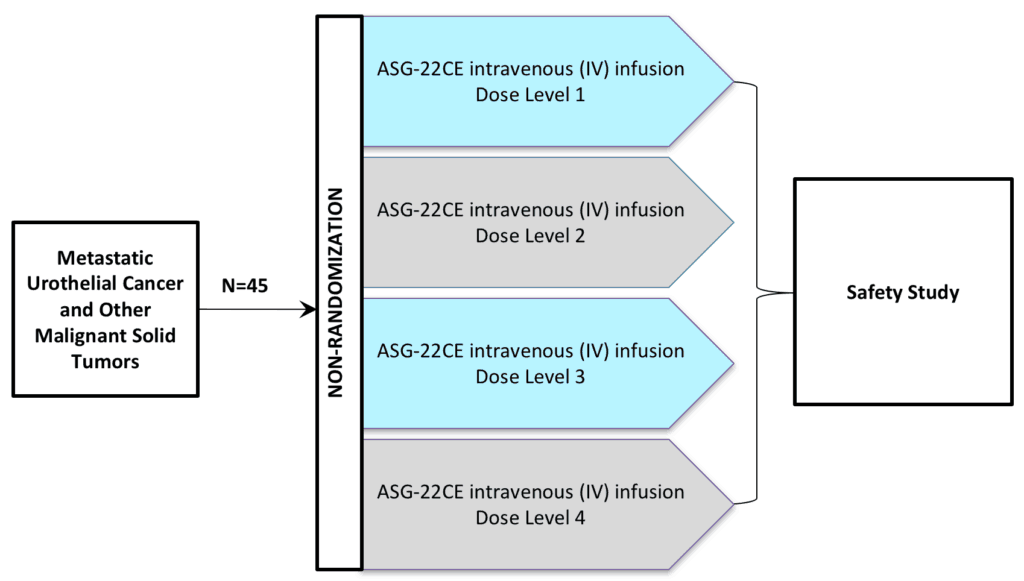
While retaining key employees of its 220 employees at Agensys, Astellas plans to complete the wind-down of Agensys research operations in the first quarter of calendar 2018. The company is still reviewing the impact of this development on its financial forecasts for the fiscal year ending March 31, 2018.
Based on the latest available data, Agensys was sponsoring 6 clinical trials (5 have been recruiting patients while one is ongoing). In addition, 2 trails were terminated and 9 trials were completed.
Collaboration
Seattle Genetics and Agensys entered into the ADC collaboration in January 2007. The companies expanded the collaboration in November 2009.
As part of the collaboration, Agensys has the right to obtain exclusive ADC licenses for multiple cancer targets. Seattle Genetics and Agensys further agreed are co-developing, globally co-commercialize and share profits on a 50:50 basis for ASG-5ME and ASG-22CE (ASG-22ME; enfortumab vedotin), while Seattle Genetics also had the option for 50:50 cost and profit-sharing of a third ADC program at the time of IND submission.