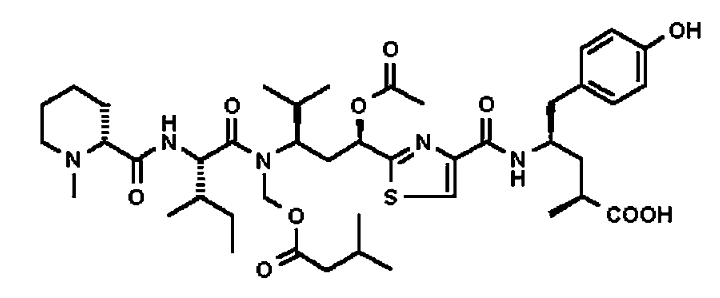
MEDI4276 is an investigational antibody-drug conjugate or ADC being developed by MedImmune, is composed of a bispecific antibody against the extracellular domain of human epidermal growth factor receptor 2 (HER2; ERBB2) comprised of the single-chain variable fragment or scFv of the anti-HER2 monoclonal antibody trastuzumab, which binds to domain IV of HER2, fused to the heavy chains of the anti-HER2 monoclonal antibody 39S, which binds to domain II of HER2, and conjugated, via a cleavable linker, to the cytotoxic anti-microtubule agent tubulysin, with potential antineoplastic activity.
Following administration of MEDI4276, the anti-HER2 bispecific antibody specifically targets and binds to HER2 on the surface of certain cancer cells. After binding, crosslinking and internalization of antibody-HER2 complexes occurs and MEDI4276 is transported to the lysosome where the linker is cleaved, thereby delivering tubulysin inside HER2-expressing cancer cells.
Clinical trials
Phase-I clinical trials in Breast and Gastric cancer (In adults, Late-stage disease, Second-line therapy or greater). This is a first time in human Phase I, multicenter, open label, single arm, dose escalation, and dose expansion study for adult subjects. NCT02576548
Tubulysin
Microtubules are a well-established drug target for the treatment of cancer. Tubulin-targeting agents affect the growth of solid tumors in two different ways:
- They inhibit tumor cell growth by disrupting the microtubule dynamics causing cell cycle arrest, and
- Through inhibitory activity on neovascularization. Angiogenesis is one of the important biological requirements for the growth of solid tumours beyond a few millimetres. An angiogenesis inhibitor in combination with an antimitotic agent may provide improved therapy for combating various cancers
Tubulysins are highly toxic tubulin-targeting agents with a narrow therapeutic window. They binds to tubulin and inhibits microtubule polymerization, which blocks cell division. This results in G2/M phase arrest, tumor cell apoptosis, and decreased proliferation of HER2-expressing tumor cells. HER2, a tyrosine kinase receptor, is overexpressed by many cancer cell types.